

You can learn filmmaking in a classroom, from a book, or on a film set. But some of the best lessons are already on screen.
Great films can teach you how to build suspense without dialogue, introduce a character in seconds, move a camera with purpose, control an audience’s attention, and tell a powerful story with surprisingly little.

For aspiring directors, screenwriters, cinematographers, editors, and producers, watching movies critically is one of the most accessible ways to study the craft.
Here are 10 classic films every filmmaker should watch—not simply because they’re celebrated, but because each offers a filmmaking lesson worth studying.
1. Citizen Kane (1941)
Orson Welles’ Citizen Kane remains an essential study in visual storytelling.
Working with cinematographer Gregg Toland, Welles made striking use of deep-focus photography, unusual camera angles, shadows, foreground and background action, and elaborate compositions.
But the film is equally interesting structurally. Instead of presenting Charles Foster Kane’s life chronologically, the story reconstructs him through the memories and perspectives of other people.
What filmmakers can learn: Composition can tell a story before a character says a word. Pay attention to where characters are positioned within the frame, how their relationships to each other change, and how the camera reinforces power, isolation, and emotion.
2. Casablanca (1942)
Casablanca is an excellent example of economical storytelling.
The film has romance, political conflict, suspense, humor, sacrifice, and memorable characters, yet all of those elements serve the central dramatic conflict.
Rick is especially worth studying. Rather than explaining his past and motivations immediately, the screenplay gradually reveals who he is through behavior, dialogue, relationships, and choices.
What filmmakers can learn: Give characters difficult choices. Some of cinema’s strongest scenes work because what a character wants conflicts with what they know they should do.
3. Seven Samurai (1954)
Akira Kurosawa’s Seven Samurai is a masterclass in handling a large ensemble without losing narrative clarity.
The film introduces numerous characters, gives them distinct personalities and motivations, establishes the geography of the village, and eventually brings everything together in complex action sequences.
Kurosawa’s staging is particularly valuable to filmmakers. Even when several characters are moving at once, the audience generally understands where to look and what is happening.
What filmmakers can learn: Action is easier to follow when the audience understands geography, objectives, and character relationships before the action begins.
4. 12 Angry Men (1957)
How do you keep an audience engaged when almost an entire movie takes place inside one room?
12 Angry Men is one of the best answers.
Sidney Lumet creates tension through performance, blocking, composition, editing, and increasingly intense confrontations rather than relying on changing locations or spectacle.
The film is particularly useful for independent filmmakers because it demonstrates that limitations don’t necessarily make a film visually or dramatically boring.
What filmmakers can learn: A compelling conflict is more valuable than an expensive location. When characters have strong objectives and opposing viewpoints, even a single room can sustain a story.
5. Psycho (1960)
Alfred Hitchcock understood that suspense is often created by controlling what the audience knows and when they know it.
Psycho continually manipulates expectations. Its framing, editing, sound, and narrative structure guide the viewer toward assumptions—and then challenge them.
The famous shower sequence is especially useful for studying editing. Its impact comes not from one spectacular image but from the relationship between many carefully selected shots, combined with sound and music.
What filmmakers can learn: You don’t always need to show everything. Suggestion, timing, reaction shots, sound, and editing can make an audience imagine more than the camera reveals.
6. 2001: A Space Odyssey (1968)
Stanley Kubrick’s 2001: A Space Odyssey demonstrates just how much cinema can communicate visually.
Large portions of the film use minimal dialogue. Instead, Kubrick relies on imagery, movement, production design, sound, music, editing, and juxtaposition.
The famous transition from a bone thrown into the air to a spacecraft is a particularly striking lesson in visual storytelling: an enormous leap in human history communicated through a single edit.
What filmmakers can learn: Before adding dialogue to a scene, ask whether the same idea could be communicated through an image, an action, a sound, or a cut.
7. The Godfather (1972)
The Godfather offers lessons in almost every department of filmmaking: screenplay, performance, cinematography, production design, editing, sound, and directing.
One of its greatest strengths is how it communicates power.
Notice who speaks, who waits, who is allowed into a room, where characters sit, how they are photographed, and what remains unsaid.
Michael Corleone’s transformation is also an excellent example of character development that happens through decisions and actions rather than constant explanation.
What filmmakers can learn: Character arcs become powerful when audiences can see the character changing through increasingly consequential choices.
8. Jaws (1975)
Jaws is essential viewing for anyone interested in suspense.
Steven Spielberg famously doesn’t rely on constantly showing the shark. Instead, the film builds anticipation through point of view, reaction shots, underwater photography, editing, sound, and John Williams’ score.
The result demonstrates an important filmmaking principle: what the audience anticipates can sometimes be more frightening than what they actually see.
It’s also a valuable lesson in adapting creatively when production doesn’t go according to plan.
What filmmakers can learn: Production limitations can force better creative decisions. Instead of asking only, “How do we fix the problem?” ask, “Can the limitation make the scene more effective?”
9. Alien (1979)
Ridley Scott’s Alien demonstrates how production design and atmosphere can become part of the storytelling.
The Nostromo doesn’t feel like a generic science-fiction set. It feels industrial, functional, claustrophobic, and lived in. That environment helps establish the tone long before the film’s central threat fully emerges.
The movie also takes time building its world and characters before escalating the danger.
What filmmakers can learn: Locations and sets shouldn’t simply look interesting. Ask what the environment tells us about the people who inhabit it—and how it can reinforce the emotion of the scene.
10. Do the Right Thing (1989)
Spike Lee’s Do the Right Thing shows how style and story can work together rather than compete.
Color, framing, music, camera movement, production design, and performance all contribute to the increasingly intense atmosphere of a hot summer day in Brooklyn.
The film is also worth studying for the way it builds a community. Supporting characters aren’t simply background decoration; together, they create a world that feels populated and interconnected.
What filmmakers can learn: Develop a visual language for your film. Choices about color, lenses, framing, movement, locations, costumes, and sound should support what you want the audience to feel.
Don’t Just Watch Movies. Study Them.
The next time you watch a great film, try watching it twice.
The first time, experience the story.
The second time, watch like a filmmaker.
Ask yourself: Where is the camera? Why did the director choose this shot? Why does the scene begin here? Why does it end there? What information is being withheld? What is the production design telling us? What changed between the screenplay and the finished scene?
You can even choose one scene you admire and break it down shot by shot. Identify the characters, location, props, wardrobe, action, sound, and other elements required to put that scene on screen.
That’s when watching movies becomes more than inspiration—it becomes filmmaking practice.
Study the Greats. Then Start Creating.
Every classic film on this list began long before audiences saw the finished movie.
It began with an idea that became a screenplay, and a screenplay that had to become a production plan.
That’s the journey Cinelaya is built around.
Share this article with your network.
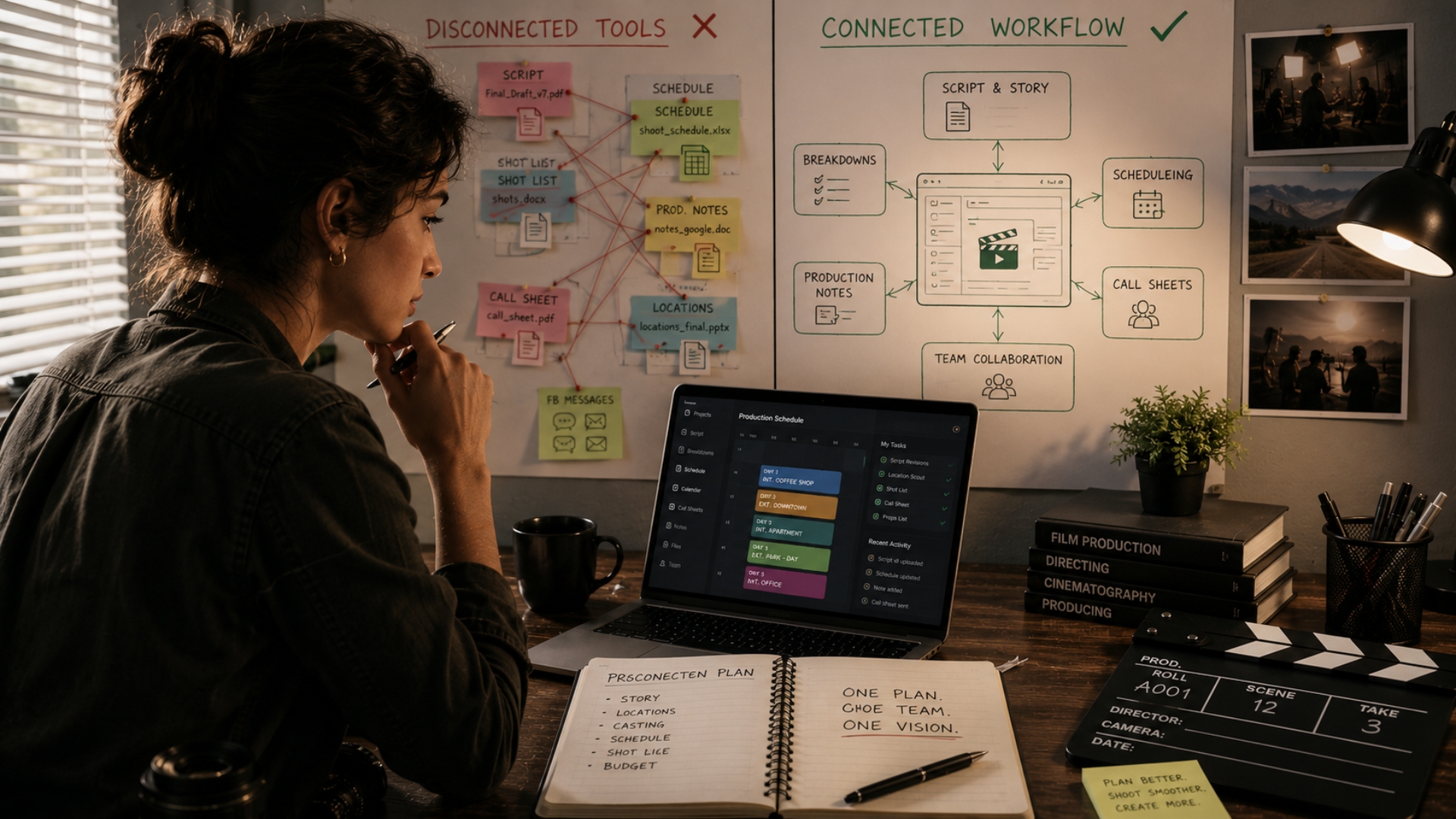
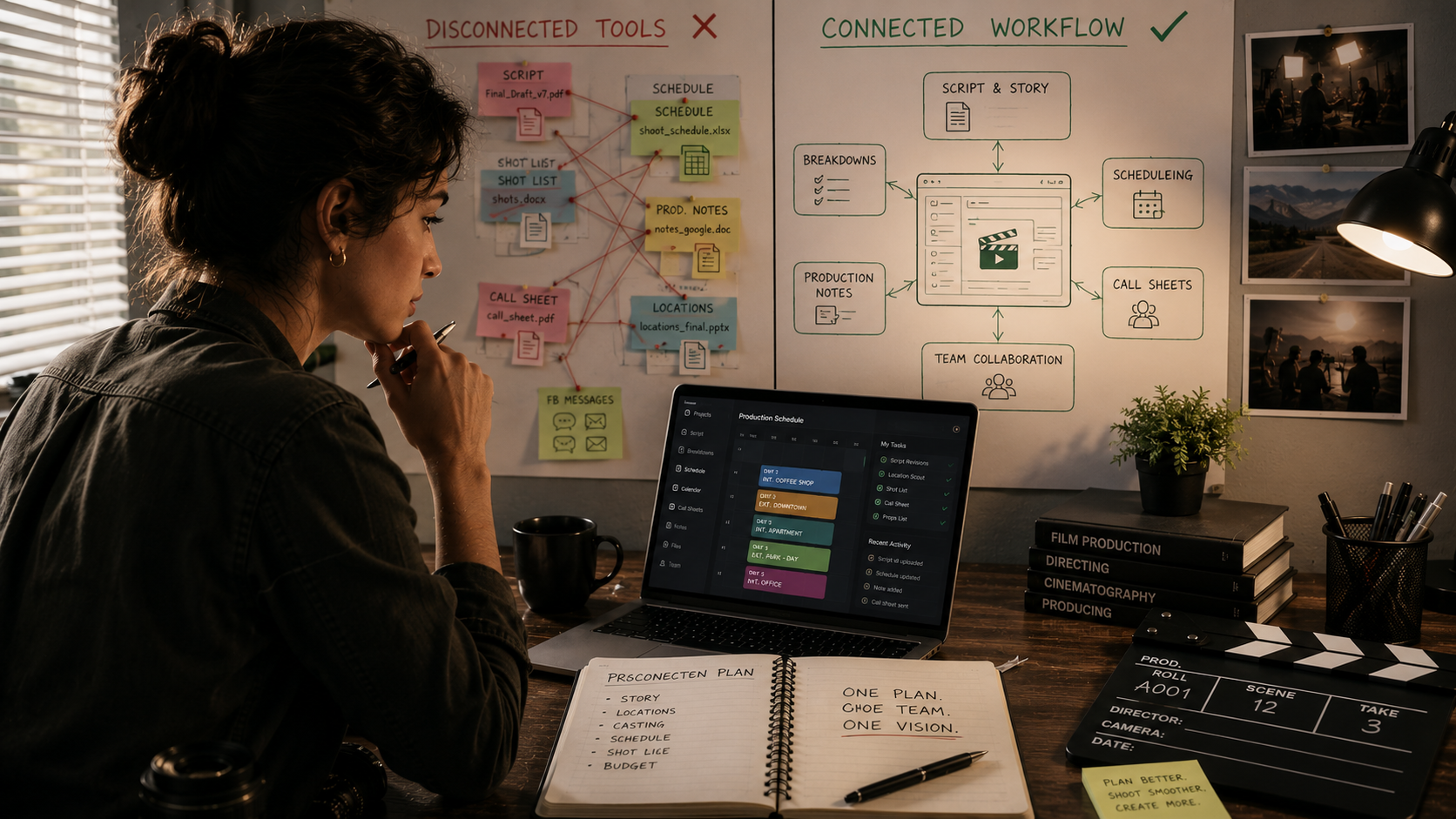
Whether you’re developing your screenplay, organizing scenes, breaking down production requirements, or preparing your project for the shoot, Cinelaya helps keep the creative and production sides of filmmaking connected.
You’ve watched how the greats did it. Now start building your own story.
Read More
-
10 Classic Movies Every Filmmaker Should Watch
-
Industry-Standard Screenplay Format: A Complete Guide for Screenwriters
-
What Is Pre-Production in Film? A Complete Step-by-Step Guide
-
How Independent Filmmakers Can Streamline Pre-Production Workflows
-
Common Production Planning Mistakes That Slow Down Film Projects