

Film productions move fast, and small planning mistakes during pre-production can quickly turn into major delays once filming begins. Missed details, disorganized communication, and last-minute scheduling issues often create unnecessary stress for both independent filmmakers and larger production teams.
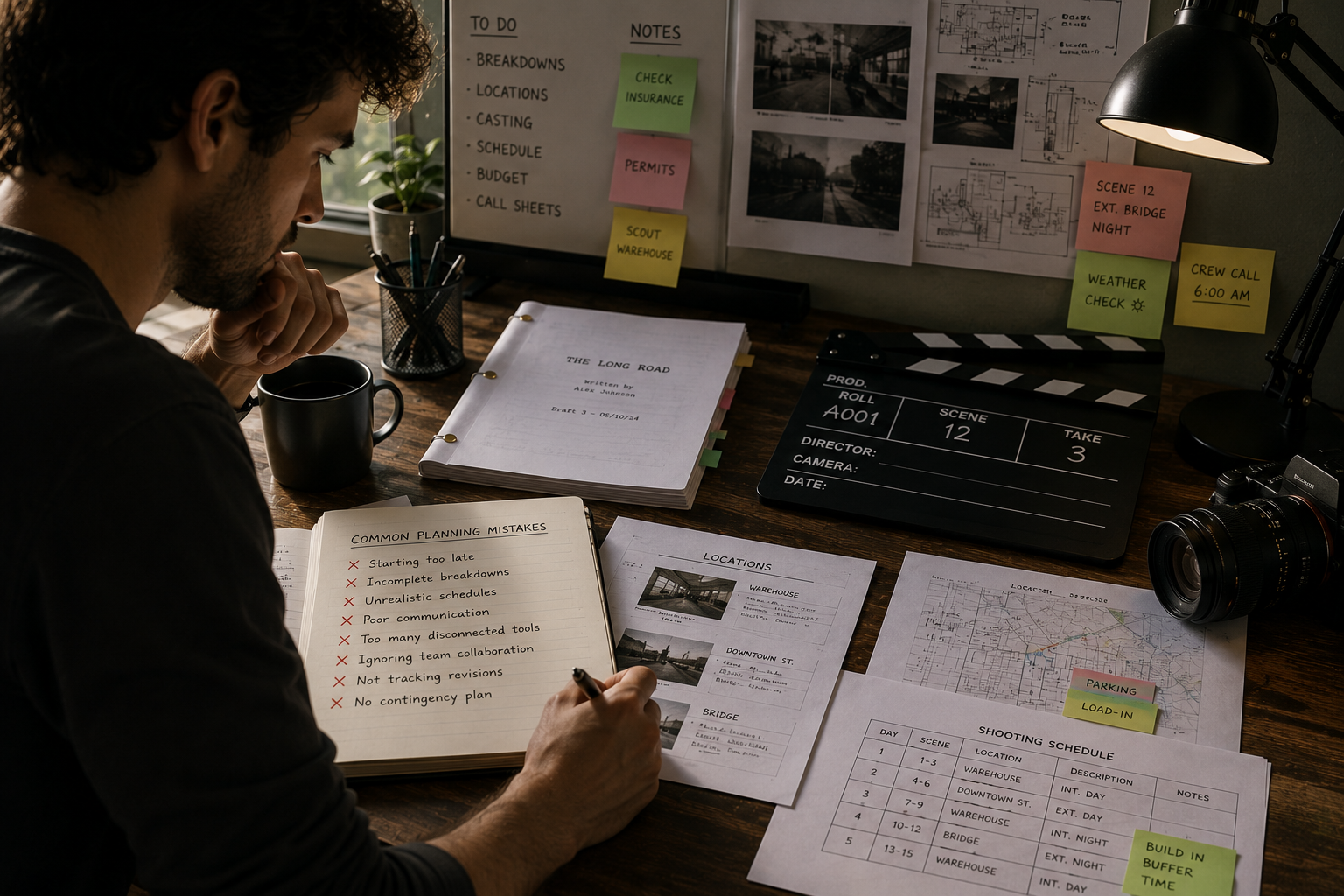
Strong production planning keeps teams aligned, reduces costly setbacks, and allows productions to move more efficiently from script to shoot day.
Starting Production Planning Too Late
One of the most common mistakes filmmakers make is waiting too long to organize production logistics. Many teams focus heavily on the creative side early on but delay scheduling, script breakdowns, and department coordination until production deadlines are already approaching.
This often leads to rushed decisions, scheduling conflicts, missing requirements, and unnecessary confusion across departments.
Starting production planning earlier gives teams more time to identify challenges before they become expensive problems during filming.
Poor Script Breakdown Organization
A screenplay contains far more than dialogue and scenes. Every location, prop, wardrobe detail, actor requirement, and production element affects scheduling and budgeting.
When script breakdowns are incomplete or disorganized, departments end up missing important details that impact filming days later on. This creates delays, rushed adjustments, and communication issues between teams.
A properly organized script breakdown helps productions stay aligned from pre-production through principal photography.
Relying on Too Many Disconnected Tools
Many productions rely on separate apps for screenplay writing, schedules, spreadsheets, notes, messaging, and production tracking. While manageable at first, disconnected systems often create workflow problems as productions grow.
Teams waste time searching for updated documents, confirming revisions, and checking whether departments are working from the latest version of information.
Keeping production planning centralized helps reduce confusion and improves collaboration across the entire team.
Weak Communication Across Departments
Production teams move quickly, and communication gaps can easily slow everything down. If directors, producers, cinematographers, assistant directors, artists, and crew members are not aligned, even small misunderstandings can affect scheduling and filming efficiency.
Unclear updates often lead to:
- Missed production requirements
- Incorrect schedules
- Delayed approvals
- Duplicate work
- Last-minute adjustments
Real-time collaboration and centralized communication help teams stay connected throughout the production process.
Unrealistic Production Schedules
Many productions underestimate how much time scenes, setup changes, location moves, or technical requirements actually take during filming.
Overloaded schedules create unnecessary pressure on cast and crew while increasing the likelihood of delays. Once productions fall behind schedule, the entire workflow becomes harder to recover.
Building realistic schedules with flexibility for adjustments helps productions stay more efficient and manageable.
Ignoring Collaboration During Pre-Production
Pre-production works best when departments collaborate early. Waiting until filming approaches to involve cinematographers, production designers, assistant directors, or post-production teams often creates avoidable complications later on.
Early collaboration allows departments to identify creative and logistical challenges before they affect the production timeline.
The more aligned the team becomes during pre-production, the smoother production usually runs.
Failing to Track Revisions Properly
Scripts, schedules, and production plans constantly evolve throughout development. Without proper revision tracking, teams may accidentally work from outdated information.
This creates confusion around:
- Scene changes
- Location updates
- Prop requirements
- Schedule adjustments
- Shot planning
- Crew coordination
Keeping revisions centralized and accessible helps productions stay organized even as projects evolve.
Share this article with your network.
Film productions are complex, but many delays come from preventable planning mistakes rather than creative challenges. Organized workflows, early collaboration, centralized production planning, and clear communication all help productions move more efficiently from pre-production to filming.
The more structured the planning process becomes, the easier it is for creative teams to stay focused on making the film itself.
Read More
Subscribe
Get curated tips delivered straight to your inbox.

All-in-one app for filmmakers. From story spark to screenplay and beyond.
© 2026 Cinelaya. All rights reserved.