

Modern film productions move faster than ever, but many filmmaking workflows still rely on disconnected tools that were never designed to work together. Scripts live in one app, schedules in spreadsheets, production notes in shared documents, and communication across endless message threads.
While this setup may seem manageable at first, it often creates unnecessary confusion, delays, and inefficiencies as productions grow.
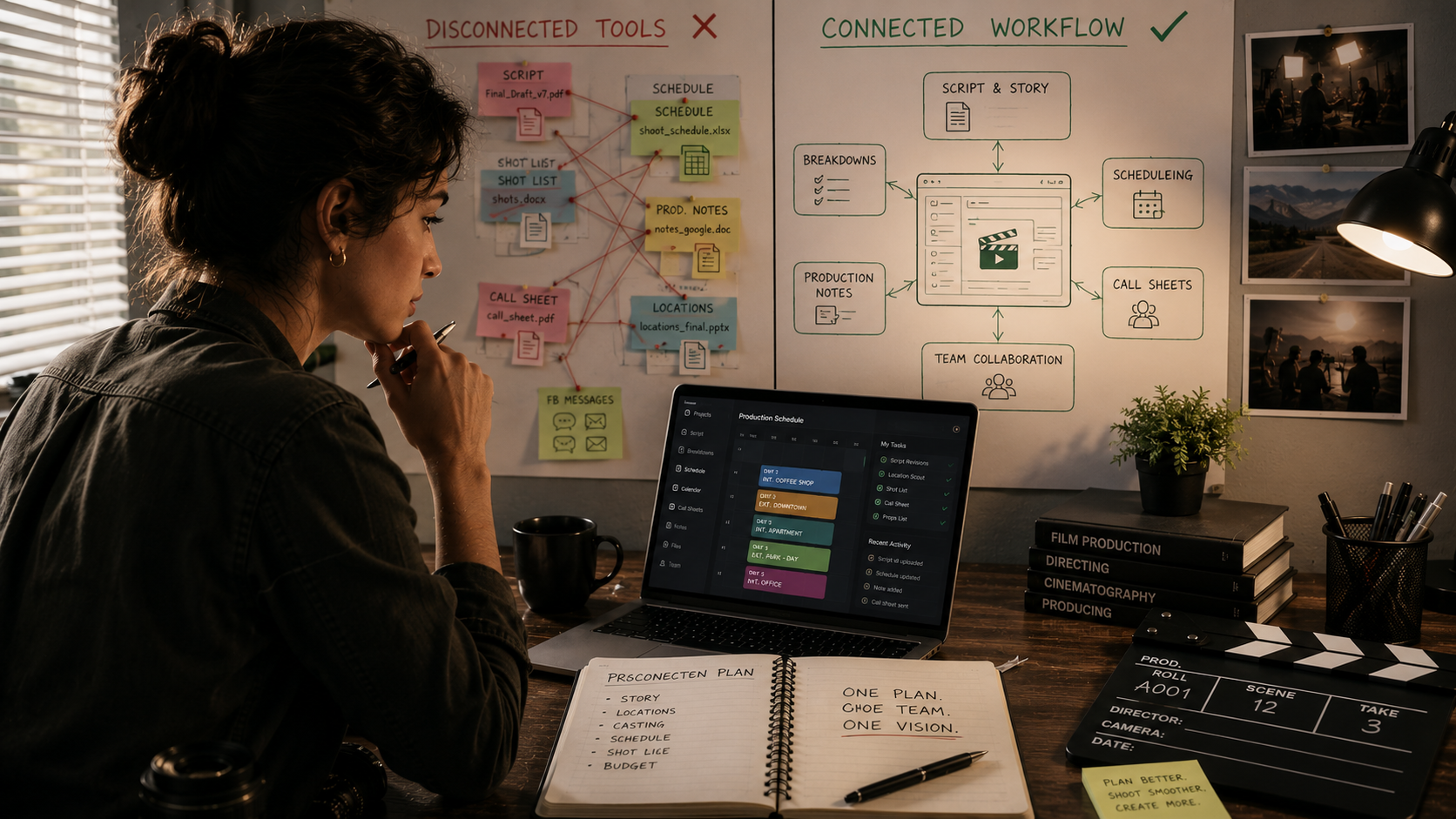
That is why more filmmakers are moving toward centralized production workflows that keep creative development, planning, and collaboration connected in one place.
The Problem With Disconnected Workflows
Film production involves constant collaboration between writers, directors, producers, cinematographers, assistant directors, artists, editors, and crew members. When information is scattered across multiple platforms, teams spend more time managing tools than focusing on the production itself.
Common workflow problems include:
- Missing or outdated documents
- Confusing revision tracking
- Misaligned schedules
- Delayed communication
- Duplicate work across departments
- Constant switching between apps
These issues become even more difficult during fast-moving productions where updates happen daily.
Tool Switching Slows Down Creative Work
Creative workflows rely on momentum. Constantly moving between screenplay software, spreadsheets, scheduling apps, cloud drives, and messaging platforms interrupts focus and slows production planning.
Even simple tasks become inefficient when teams need to:
- Search for updated files
- Confirm the latest revisions
- Re-send production notes
- Update multiple systems manually
- Coordinate changes across departments
Over time, these small interruptions create major production slowdowns.
Collaboration Becomes Harder Across Departments
Disconnected workflows often create communication gaps between departments. A schedule change may not immediately reach the cinematography team. Script revisions may not be reflected in production breakdowns. Props or wardrobe requirements may be overlooked because information lives in separate systems.
When departments operate from disconnected tools, collaboration becomes reactive instead of organized.
Centralized workflows allow creative teams to stay aligned in real time, reducing confusion and improving communication across the production process.
Production Revisions Become Difficult to Manage
Film projects constantly evolve during development and pre-production. Scenes change, schedules shift, locations get replaced, and production requirements adjust throughout the process.
Without centralized planning systems, revision tracking becomes difficult and teams may accidentally work from outdated information.
This often leads to:
- Incorrect shooting schedules
- Missed production requirements
- Delayed approvals
- Last-minute adjustments on set
Keeping revisions connected within one workflow helps productions stay organized as projects evolve.
Independent Productions Need Efficiency More Than Ever
Independent filmmakers often work with smaller teams, tighter schedules, and limited budgets. Managing disconnected workflows creates unnecessary operational pressure that smaller productions cannot always absorb.
Centralized production systems help smaller teams stay more organized without needing additional administrative overhead.
By reducing tool switching and improving collaboration, productions can focus more energy on storytelling and execution instead of workflow management.
Modern Productions Are Becoming More Collaborative
Filmmaking today is more collaborative than ever. Writers, producers, cinematographers, assistant directors, editors, and artists often contribute to planning and creative discussions throughout the entire production process.
Modern workflows need systems that support:
- Real-time collaboration
- Shared production visibility
- Faster communication
- Centralized planning
- Easier revision tracking
As productions become increasingly collaborative, disconnected workflows simply become harder to maintain efficiently.
The Shift Toward Centralized Production Workspaces
More filmmakers are adopting connected production workspaces that combine story development, screenplay writing, breakdowns, scheduling, and collaboration into one system.
Instead of managing scattered tools, productions can:
- Keep departments aligned
- Access updated information faster
- Reduce workflow confusion
- Simplify production planning
- Improve team collaboration
Centralized workflows help productions move faster while keeping creative and logistical planning connected throughout the process.
Share this article with your network.
Disconnected production tools may work temporarily, but they often create unnecessary friction once productions become more collaborative and complex.
Modern filmmakers are shifting toward connected workflows because streamlined production planning improves organization, communication, and creative efficiency across the entire team.
The fewer barriers teams face during pre-production, the easier it becomes to focus on what matters most: making the film.
Read More
Subscribe
Get curated tips delivered straight to your inbox.

All-in-one app for filmmakers. From story spark to screenplay and beyond.
© 2026 Cinelaya. All rights reserved.