

Pre-production is where every successful film begins. It shapes the creative direction, organizes the production process, and prepares the entire team before cameras start rolling. For independent filmmakers, though, pre-production can quickly become overwhelming when scripts, schedules, notes, and production documents are scattered across multiple tools and platforms.
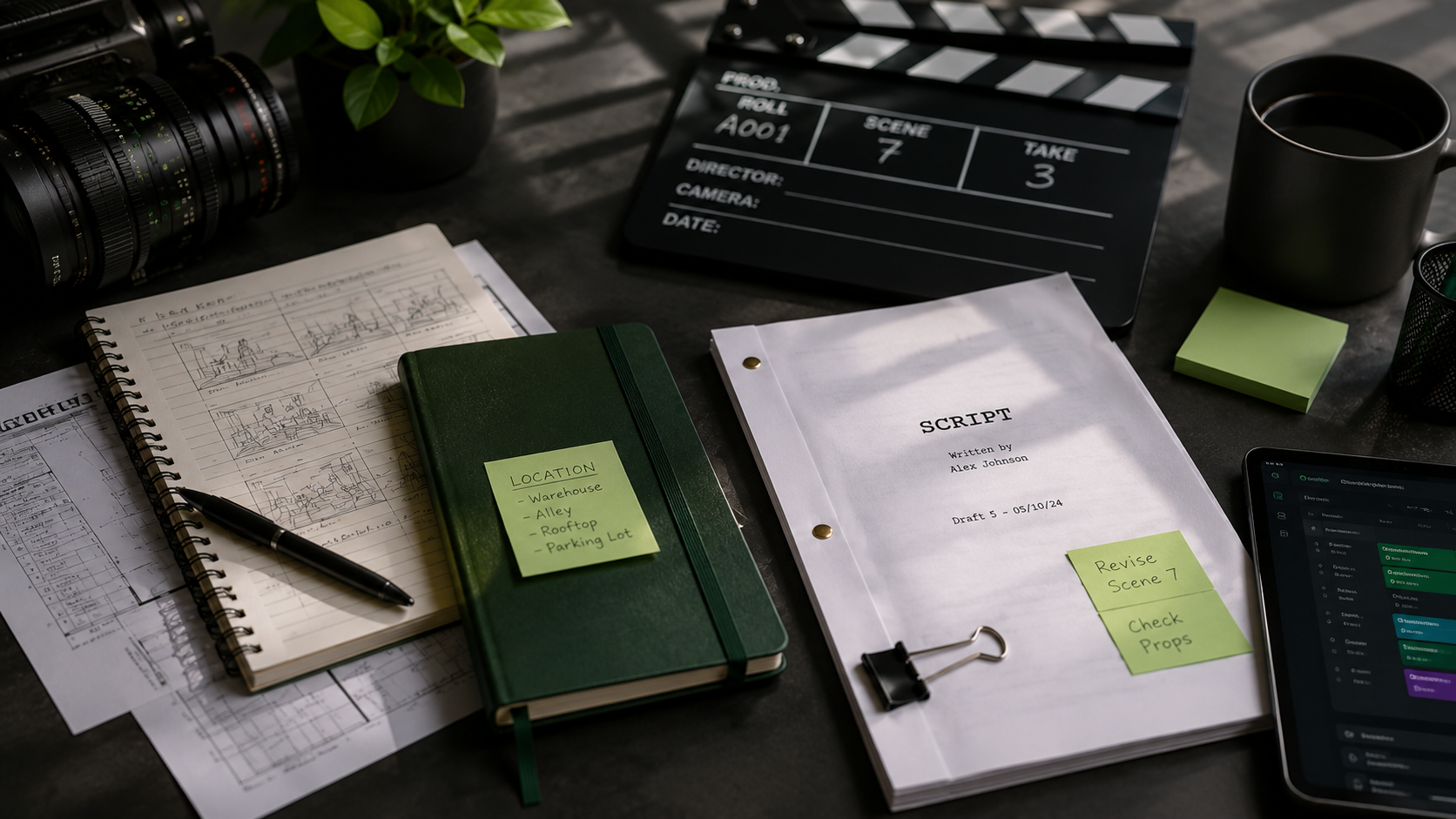
A more streamlined workflow helps productions stay organized, avoid costly mistakes, and move faster from concept to shoot day.
Start With a Clear Story Development Process
Strong productions begin with organized ideas. Before moving into scheduling or production planning, filmmakers should create a structured process for developing scenes, story arcs, and creative references.
Visual story planning helps directors and writers identify pacing issues, scene gaps, and production requirements earlier in the process. Keeping storyboards, scene ideas, and screenplay drafts connected also reduces confusion once collaboration begins.
When creative development stays organized from the beginning, the rest of pre-production becomes significantly easier to manage.
Centralize Scripts and Production Documents
One of the biggest challenges for independent productions is managing disconnected files. Scripts are often stored separately from production notes, schedules, shot lists, and revisions, making collaboration harder for the team.
Centralizing production materials into one workspace allows writers, producers, directors, cinematographers, and assistants to stay aligned throughout the project. Instead of searching through email threads or shared folders, teams can access updated information in one place.
This becomes especially important once revisions start affecting scheduling, locations, props, wardrobe, or crew coordination.
Simplify Script Breakdowns Early
Script breakdowns are one of the most time-consuming parts of pre-production, especially for smaller productions working with limited resources.
Breaking down scripts early allows filmmakers to organize cast requirements, props, wardrobe, locations, special equipment, and production notes before scheduling begins. This reduces last-minute surprises during filming and helps production teams budget time and resources more efficiently.
A structured breakdown process also improves communication across departments because everyone works from the same organized production information.
Improve Team Collaboration
Independent productions often rely on small teams handling multiple responsibilities at once. Without clear collaboration systems, communication quickly becomes disorganized.
Real-time collaboration tools help creative teams review screenplay changes, production notes, schedules, and planning updates without relying on endless message threads or scattered documents.
When writers, producers, cinematographers, assistant directors, and artists can work within the same workflow, production planning becomes faster and more efficient.
Build Smarter Production Schedules
Scheduling is where creative planning meets logistical reality. Independent filmmakers need schedules that account for location availability, actor schedules, production timelines, and crew coordination while staying within budget.
Creating production schedules earlier in pre-production gives teams more flexibility and helps prevent unnecessary delays once filming begins.
A well-organized schedule also keeps departments aligned so everyone understands priorities before shoot days begin.
Reduce Tool Switching
Many independent filmmakers rely on separate apps for screenplay writing, scheduling, collaboration, task management, and production planning. While this may work initially, disconnected workflows often create confusion as productions grow.
Reducing tool switching helps teams stay focused and organized throughout pre-production. Keeping story development, production planning, collaboration, and scheduling connected inside one workflow simplifies communication and improves overall efficiency.
Share this article with your network.
Pre-production is one of the most important stages of filmmaking because it directly impacts how smoothly production runs later on. For independent filmmakers, staying organized early can save valuable time, reduce stress, and improve collaboration across the entire team.
A streamlined workflow allows filmmakers to focus less on managing scattered information and more on bringing creative ideas to life.
Read More
Subscribe
Get curated tips delivered straight to your inbox.

All-in-one app for filmmakers. From story spark to screenplay and beyond.
© 2026 Cinelaya. All rights reserved.